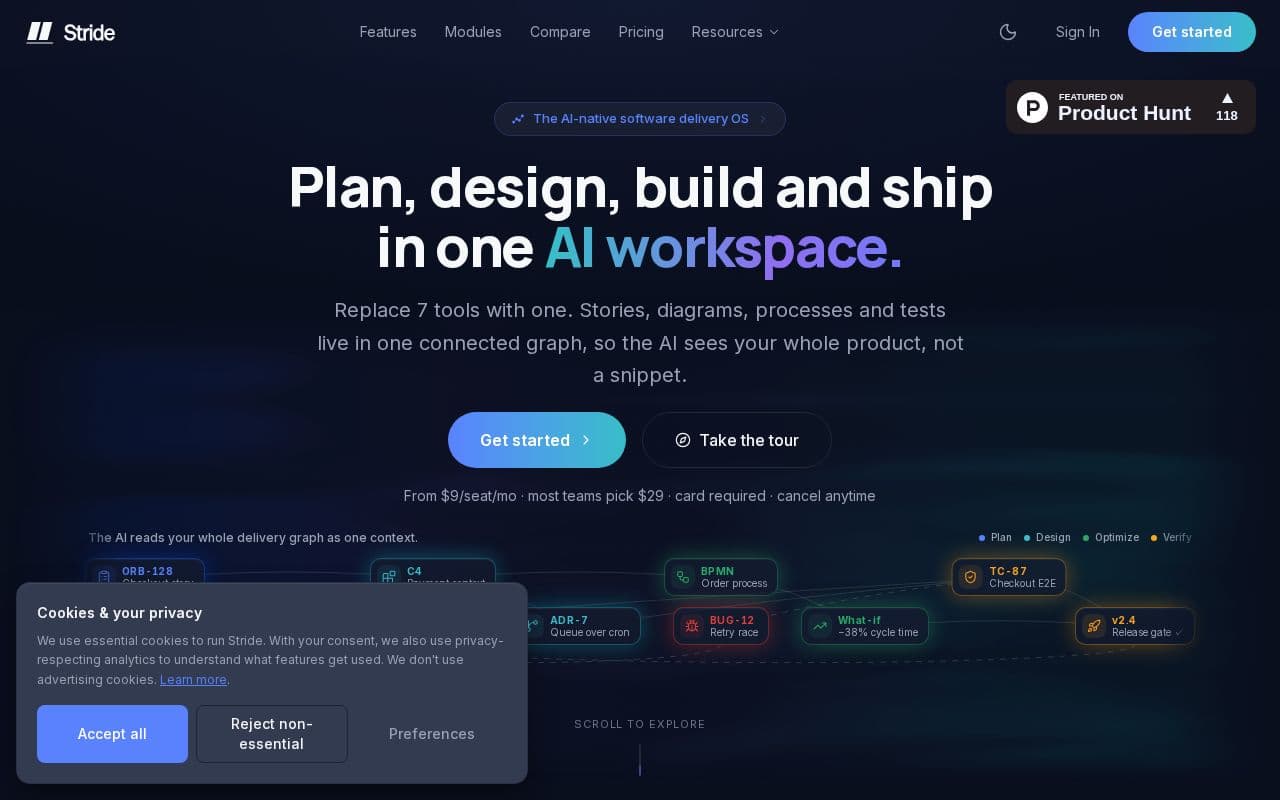
What is Stride?
The platform enables teams to import existing data from common tools and generate artifacts such as stories, architecture diagrams, and test cases based on project context. This approach maintains traceability between elements like requirements, processes, and defects through a shared structure. By consolidating functions that typically span several applications, Stride aims to minimize context loss and repetitive updates. It includes features for role-specific workflows, allowing developers, product managers, and quality leads to interact with the same underlying data. Modules cover backlog management, solution proposals with trade-offs, bottleneck identification, and quality enforcement. The system supports integration with AI coding assistants while providing controls for enterprise use.
Key features
What you can use Stride for
AI-Powered Planning
Draft epics, stories and acceptance criteria from project history, velocity and prior sprints within the Plan module.
Architecture and Design Generation
Receive proposed solutions with trade-off analysis and C4 diagrams generated from a shared project context in the Design module.
Quality Verification and Risk Management
Generate test cases from past defects, apply quality gates, risk scores and defect prediction before releases in the Verify module.
How to use Stride
- 1Connect your stack by importing from Jira or linking Claude Code via MCP server
- 2Describe your project, tech stack and goals to build initial AI context
- 3Review AI-generated stories, acceptance criteria and architecture options
- 4Apply quality gates, risk scores and defect predictions in Verify
- 5Ship releases with live traceability and automatic updates across artifacts
Stride pricing
Pricing model: Paid. Plan details are indicative — check the site for current prices.
Stride
- per seat
- card required
- cancel anytime
Stride Pro
Popular- per seat
- most teams pick this
- card required
- cancel anytime
Editor's verdict
Pros
- +Replaces 7+ tools with single workspace
- +Reduces context switching and status updates
- +Fast payback (~4 weeks) and high annual savings
Cons
- –Card required to start
- –Subscription pricing per seat
Our take: Stride is a solid productivity choice. It's valued for replaces 7+ tools with single workspace and reduces context switching and status updates. The main trade-off is card required to start. Best when you need reliable, professional output.
Frequently asked questions
Stride is an AI-native software delivery platform that links stories, diagrams, processes, tests, defects and releases in one connected graph.
Summary
Stride is a solid productivity choice. It's valued for replaces 7+ tools with single workspace and reduces context switching and status updates. The main trade-off is card required to start. Best when you need reliable, professional output.
User reviews
Verified reviews from the community shape this tool's rating.
Loading reviews…
Stride alternatives
Similar productivity tools worth comparing.


